Industrial packaging tends to go undiscussed until waste volumes increase or replacement costs begin affecting operations. Unlike one-way containers that become waste after a single trip, there are several ways reusable IBCs close the loop in industrial supply chains to support a circular packaging model. For teams under pressure to improve efficiency and reduce overall operating costs, it’s time to make the shift to a closed-loop system.
What Does it Mean to “Close the Loop” in Industrial Supply Chains?
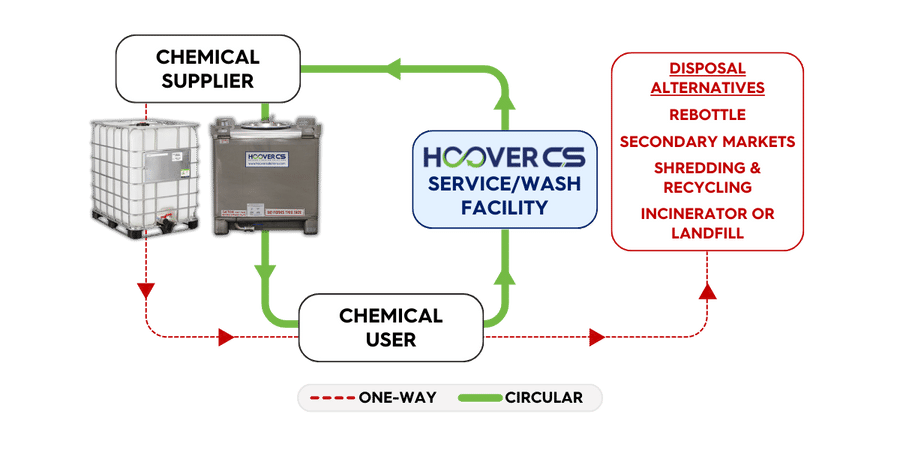
For industrial supply chains, “closing the loop” means creating a system where packaging materials are continuously recovered, reused, refurbished, or recycled instead of being disposed after a single use. A closed-loop system follows a more circular process rather than a traditional linear model of manufacturing, using, and disposing, that keeps packaging in continuous circulation for repeated, long-term use.
How Reusable IBCs Fit into Circular Packaging Programs
Reusable intermediate bulk containers (IBCs) are engineered for extended lifecycle performance, making them an ideal fit for many reasons.
1. They Reduce Reliance on Single-Use Industrial Packaging
Single-use plastic containers and drums are discarded after one shipment and create a recurring flow of replacement purchasing and disposal planning. Reusable IBCs change that pattern by remaining in circulation with multiple use cycles.
As a result, packaging becomes a recoverable, reusable operating asset within the supply chain. Teams can focus less on constant repurchasing and more on servicing and redeploying containers.
2. They Support Long-Term Reuse Cycles
A closed-loop system depends on packaging that can remain in service for many years. The durability of reusable IBCs reinforces that circular structure with their ability to go through hundreds of fill-and-return cycles.
Operational efficiency matters in industrial supply chains where packaging availability can lead to disruptions. When reuse and return flows are built into the process, teams can manage packaging with greater predictability and less disturbance from one cycle to the next.
3. They Make Maintenance and Cleaning Part of the System
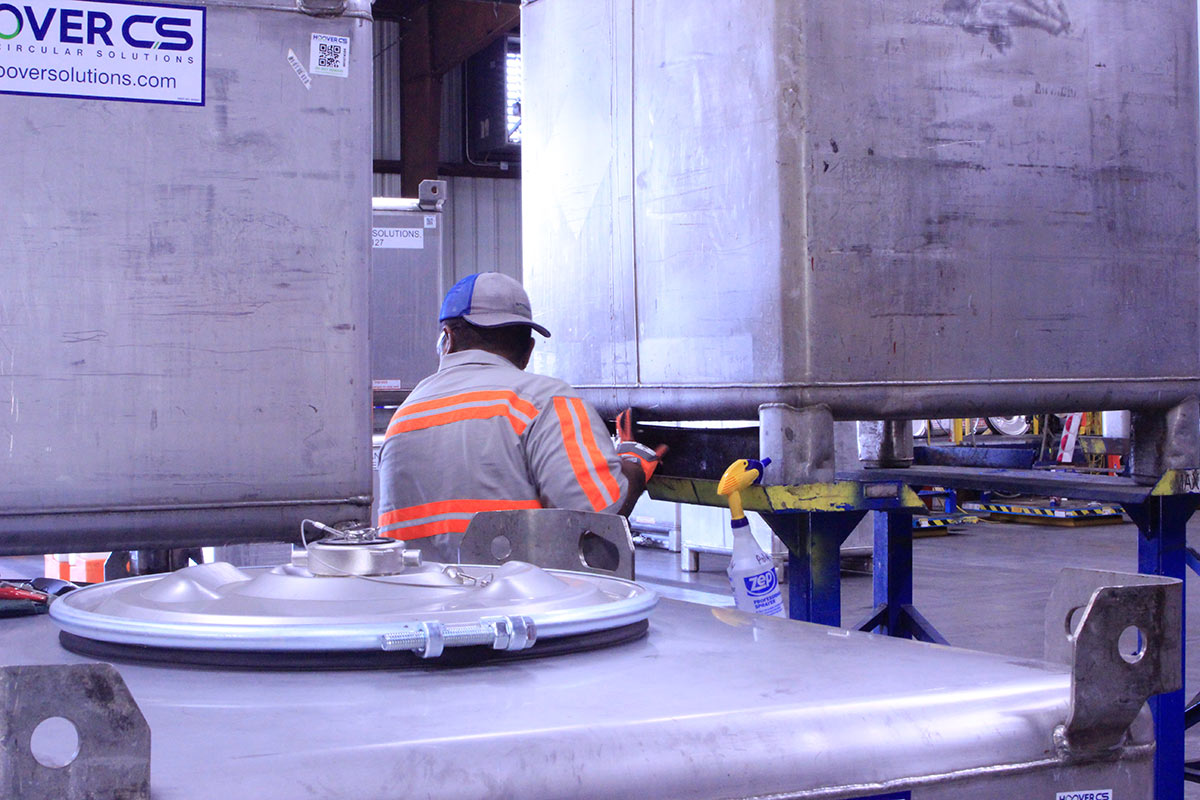
A circular packaging model only works when the containers are maintained between uses. Cleaning and routine maintenance cannot sit on the sidelines because container integrity affects safety and workflow continuity. Providers like Hoover CS offer recertification, as well as ongoing maintenance and cleaning as part of their service offering to support closed-loop systems.
Integrating maintenance into reusable packaging systems ensures long-term use and improved lifecycle performance. Servicing is no longer a reactive task that occurs only after an issue arises. Integrity management becomes part of the operating model, helping each asset stay safe for repeated circulation.
4. They Improve Visibility Through Tote Fleet Management
Closing the loop can provide better asset tracking and visibility for reusable IBCs by incorporating temperature-reading, level-monitoring, and GPS technologies into fleet operations. By monitoring movements and speed, companies gain insight into container lifecycles, utilization, and return rates.
Better oversight supports stronger decision-making across packaging, operations, and transportation. Assets become easier to manage and control when fleet data is built into circular packaging programs. Teams can use that insight to reduce losses and identify patterns to lower costs and improve the performance of their container fleets.
5. They Help Standardize Packaging Across Supply Chain Touchpoints
When companies reduce variation in IBC dimensions and configurations, they often gain measurable improvements in safety, cost control, and logistics performance. For example, a standardized fleet of 550-gallon stainless-steel containers reduce handling errors because operators become familiar with valves and connection points, stacking limitations, and weight distribution for scheduled transport.
A more consistent packaging format can also simplify internal procedures and create more efficient returns, inspection, and redistribution flows. The goal of standardization is to create operational consistency across the supply chain.
6. They Lower Packaging Waste and Disposal Costs
Waste and disposal costs are significantly reduced when packaging stays in use for longer periods. Durable, closed-loop packaging like stainless-steel IBCs can be cleaned and reconditioned for recirculation. Single-use plastic IBCs, on the other hand, have a short service life and require frequent replacements while also incurring disposal and recycling fees.
Longer asset life can improve lifecycle efficiency across packaging operations. Fewer replacements contribute to lower carbon emissions associated with manufacturing as well, making the environmental impact of reusable packaging a clear benefit for companies prioritizing cost-efficiency and sustainability.
7. They Align Sustainability Goals with Day-to-Day Operations
Sustainability goals and environmental, social, and governance (ESG) initiatives carry more weight when packaging performance is measured across the business. IBC circulation programs support that connection by giving companies a packaging model that fits more directly into reporting structures, internal benchmarks, and broader ESG objectives.
When tracking technology is incorporated into fleet operations, teams gain insight into utilization rates, waste reduction volumes, and many other metrics to quantify environmental impact across their organization. As companies work to align day-to-day operations with sustainability improvements, reusable packaging becomes increasingly valuable.
8. They Support Supply Chain Resilience
Supply chain resilience is achievable through the adoption of closed-loop IBC programs. When companies rely on continuous purchases of new single-use containers and drums, they become vulnerable to supplier delays and shortages.
Reusable packaging reduces those risks because containers remain in circulation for longer, giving companies greater predictability and operational continuity. A more controlled asset-management model results in greater packaging availability, ultimately leading to fewer disruptions and variability across the supply chain.
What Companies Should Evaluate Before Participating in a Reusable IBC Program
Companies considering a shift to reusable IBCs should evaluate how a closed-loop model would fit into their operating structure. Success depends on how reusable assets will move through the supply chain and how they will be maintained and recovered.
Early evaluation should focus on current packaging waste and replacement costs, recoverability of assets in existing operations, and logistics infrastructure. Companies will also need to plan for container returns and have a process in place for ongoing cleaning, maintenance, and asset tracking. Participating in reusable IBC programs isn’t just a sustainability initiative, but a long-term supply chain optimization strategy.
How to Transition to Circular Packaging
A closed-loop packaging system builds resilience and efficiency. Moving from single use to circular packaging reflects a broader shift from transactional consumption to full lifecycle management. This requires an all-hands-on-deck approach across operations and logistics to finance and customer service teams.
As an experienced intermediate bulk container rental supplier and service provider, Hoover CS is well-positioned to help your company make the move to closed-loop packaging. Whether you need a reliable IBC rental partner, integrated maintenance and cleaning services, or expert fleet management implementation and guidance, we make the process easy on your operations and positive for the environment.
For companies evaluating circular packaging models, the bigger opportunity is not simply adopting reusable containers but establishing a system with built-in resilience, efficiency, and cost-savings. Viewed from that perspective, the many benefits and ways reusable IBCs close the loop in industrial supply chains point to a larger shift toward a circular economy designed for continuity and control.