Moving hazardous and non-hazardous bulk liquids, gases and chemicals across North America requires coordination well beyond the time a shipment spends in transit. Companies must account for product containment and how equipment will move through the service network once a delivery is complete. When production schedules shift or demand changes, teams must adapt their packaging and transportation plans without disrupting product flow. Bulk liquid storage and transport solutions in North America bring those considerations into one logistics strategy.
For chemical and industrial operations where products are often corrosive or reactive, equipment selection depends on several factors, including compatibility, tank configuration, and operating conditions. Standardized bulk containment solutions such as ISO tanks can provide safe storage and transportation for a variety of applications, giving companies greater reliability when managing shipments across a diverse geographic network.
Bulk Liquid Logistics Extend Beyond Containment
Bulk liquid logistics begin far before a container is selected. Operations teams must coordinate equipment with production schedules so loading can proceed when product becomes ready for shipment, while the receiving facility needs a clear plan for managing the tank after arrival.
Viewing each deployment as a complete equipment cycle gives companies a stronger basis for planning, allowing teams to account for how the tank moves from initial deployment through final delivery, service, and return.
ISO Tanks Connect Compliance With Transportation
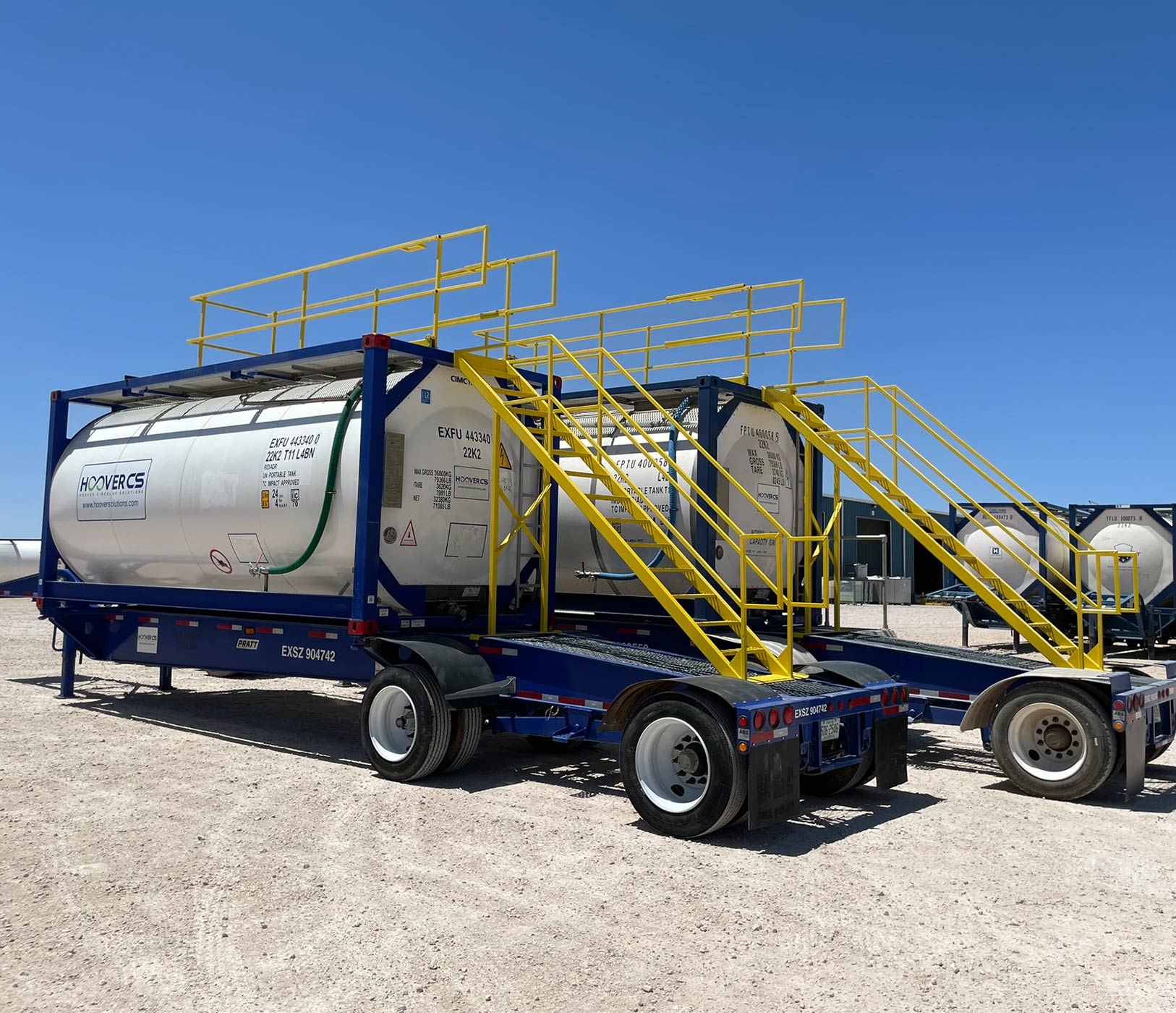
Highly compatible with North American logistics networks, ISO tanks are regulated by international portable tank instructions, also known as T-codes (T1 through T22, T50, and T75), which define the structural specifications, pressure ratings, and safety provisions required to safely transport hazardous and non-hazardous bulk liquids. Tank length, capacity, fittings, linings, and other configurations can vary. Operations teams should consider T-codes, product safety data sheets (SDS) and Department of Transportation (DOT) regulations to guide tank selection and ensure compliance.
Companies that do not maintain their own fleets can use an ISO tank rental provider like Hoover CS to lease equipment for their bulk liquid operations. The leasing model provides access to readily available equipment and scalability, while the broader logistics plan determines how that tank moves throughout the network.
Temporary Storage Bridges Scheduling Gaps
Production output does not always align perfectly with transportation or receiving schedules, leaving operations teams scrambling to manage scheduling gaps without disrupting distribution. In these instances, ISO tanks can act as temporary storage solutions, providing additional flexibility under appropriate conditions. Keeping bulk liquids contained while the next stage of the logistics process catches up can limit unnecessary product handling and give teams more control when schedules change.
Planning temporary storage before scheduling conflicts arise helps reduce operational downtime. Teams can account for both unplanned and expected holding periods, which keeps bulk product movements aligned with the broader logistics plan.
Intermodal Support for Complex Supply Chains
Designed for bulk transportation of liquids over long distances by road, rail, or sea, the standardized dimensions of ISO tanks allow them to move seamlessly through intermodal networks, giving logistics teams the ability to incorporate different modes of transport for shipments outside of North America.
Intermodal capability becomes particularly important for companies with global logistics where costs, security, and ESG initiatives are prioritized. For example, combining long-haul rail or ocean shipping with final delivery by road offers cost efficiency and emission reduction benefits. Using intermodal containers allows teams to quickly adapt to supply chain challenges; however, companies still need to coordinate each transport mode according to applicable regulations and requirements.
Rental Capacity Supports a Diverse Network
Bulk liquid operations spanning multiple facilities or diverse regions can make it difficult for companies to operate a fixed fleet of ISOs. Rental programs give companies flexibility to adjust the size of their fleet to meet fluctuating demand. Organizations can secure additional tanks for temporary increases in volume without maintaining that capacity after projects return to typical levels. For operations spread across North America, partnering with a rental supplier and their broader service network brings new levels of reliability to bulk logistics planning.
Advance coordination remains important to meet the demands of any operation, but with a strong rental provider, teams are better prepared to align equipment with their ongoing transportation requirements.
Fleet Visibility Enhances Operational Efficiency
Greater visibility can enhance the safety of bulk liquid operations. From initial fill to final delivery, logistics teams need reliable information about where their assets are—and the contents stored inside.
Fleet tracking software and tank telematics give companies a way to monitor bulk liquid storage and mobile tank levels, temperatures, and GPS locations in real time. Teams can use this information to identify stalled equipment, streamline delivery schedules and fleet movements, and coordinate returns. Leak-detection technology is also available for those transporting sensitive chemicals, which helps with quick identification of unsafe temperature shifts or leaks to prevent spills and product degradation.
Cleaning and Maintenance Prepare Tanks for Continued Use
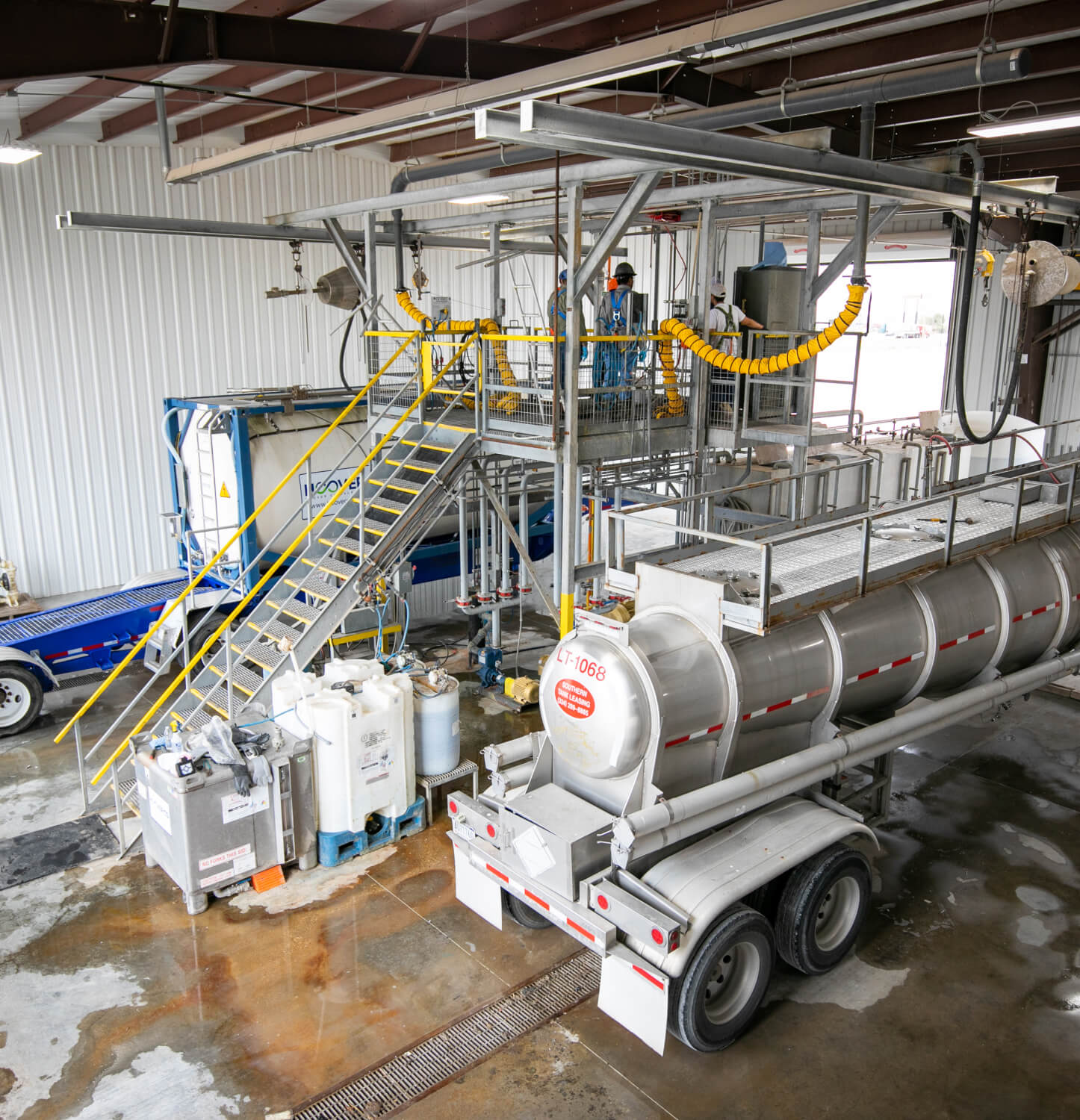
With bulk tanks like ISO containers, the operational life cycle continues after the product has been discharged. Before another deployment, the tank may need to be transported to a qualified service facility for cleaning based on the previous cargo, product characteristics, customer requirements, and intended next use. The tank should also be examined for damage, corrosion, residue, and the condition of its valves, gaskets, and service equipment. Periodic inspections and tests must be completed at the applicable regulatory intervals, with additional testing potentially required when damage, modification, leakage, or another unsafe condition is identified. The reuse cycle resets when a tank meets all DOT regulations, enabling the equipment to safely return to service.
An ISO tank container typically has a lifespan of 20 to 30 years with proper maintenance and recertifications. With long-term leasing contracts, companies have steady access to available equipment with the benefit of reduced capital expenditure and operational readiness.
Choosing a Provider Around the Complete Tank Cycle
For companies specializing in bulk liquid hauling across North America, having a reliable tank supplier is key to keeping operations running smoothly. When evaluating providers, decisionmakers should consider whether to rent or buy containers and weigh how each option supports the complete tank cycle. Leveraging a rental provider’s fleet—with integrated services and technology—offers a long-term partnership without the long-term investment and headache of managing an owned fleet.
Connecting Storage and Transportation Across North America
Effective bulk liquid storage and transport solutions in North America account for both the product journey and the equipment supporting it. Storage requirements can change when schedules shift, while over-the-road transportation moves tanks through a network that requires continued safety and compliance coordination after final delivery. Companies gain greater efficiency and control when tank selection is planned alongside bulk liquid logistics.
Hoover Circular Solutions, an experienced tank rental and service provider, offers standard and specialty ISO containers for chemical and industrial operations. Companies evaluating their bulk liquid logistics can contact Hoover CS to discuss ISO tank leasing options and integrated services and technology for their ongoing transportation needs across North America.