Turnarounds place intense pressure on refinery and petrochemical teams to execute with precision. Fresh, spent, presulfided, and precious metal catalyst management carries operational and financial weight that should not be overlooked. That is why this complete guide to catalyst storage and transportation examines the decisions that protect material integrity while directly contributing to safer operations and peak performance.
What Are Catalyst Bins and Why They’re Essential
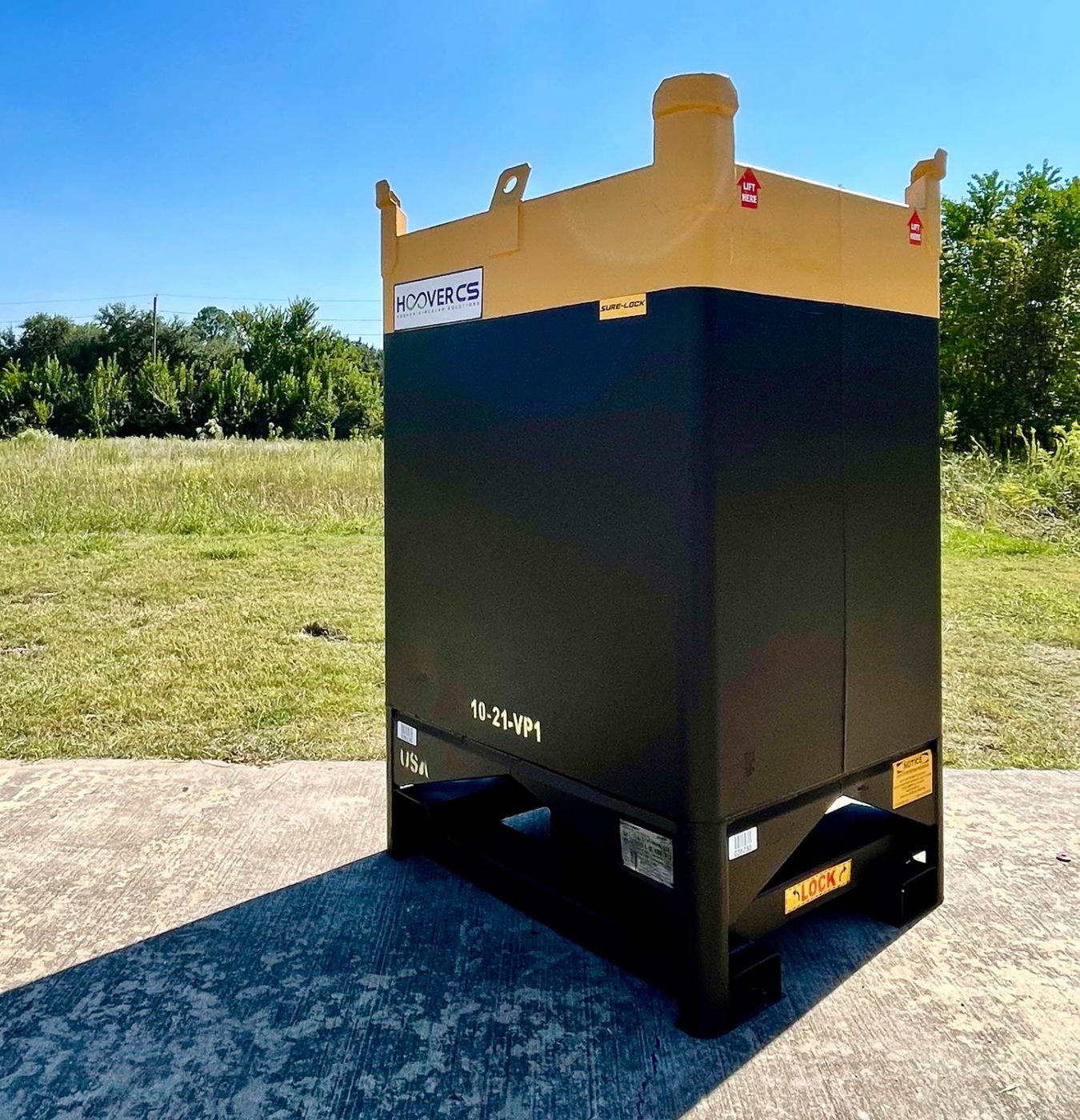
Catalyst bins are engineered steel containers designed specifically for storing and transporting fresh or spent catalysts used in refinery and petrochemical operations. These bins are known for their ease of handling, enhanced safety features, and hermetically sealed design. Their airtight environment protects valuable catalysts from moisture, contamination, and physical damage, while also preventing leakage and spills.
Proper containment plays a direct role in preserving catalyst performance. Controlled storage conditions help prevent degradation before loading, unloading, or regeneration.
For facilities managing large volumes during turnarounds, catalyst bins provide a dependable, safe, and transport-ready containment solution that reduces operational disruption. Because catalysts represent both financial investment and operational risk, reliable containment is essential for safer handling, maintaining plant uptime, ensuring regulatory compliance, and reducing waste.
Types of Catalyst Bins and Their Applications
Selecting the appropriate bin configuration requires aligning equipment capabilities with on-site logistics for optimal handling efficiency. Standardized dimensions and capacities simplify planning and loading. When equipment is uniform, operational teams can forecast space requirements and bin staging with greater accuracy; however, specialty bins may be required for more complex catalysts.
Standard Configurations for Refinery Operations
Many facilities rely on standard catalyst bins during planned turnarounds, shutdowns, and change outs. These bins are engineered for durability and repeat use, allowing consistent deployment across multiple sites and events. Standard features and specifications include:
- Carbon steel and/or stainless steel construction
- Off-center turning cam bar mechanisms for secure closure
- NPT purge plugs on the top deck and bottom cone
- Stackable with forklift and crane handling
- Pre-sealing of top and bottom enclosures to reduce tampering
- 100% mechanical handling
Specialty Configurations for Complex Projects
Certain turnaround scopes require enhanced design features. Projects involving precise discharge requirements for catalysts that are wet, oil-saturated, contain copper, or are considered “chunky” or “sticky” may benefit from specialty bin configurations. Specialized features include:
- Sloped hopper cones for efficient discharge
- Forklift-removable top lids
- Units designed with leakproof bottoms
- Nesting capabilities for improved security & stacking efficiency
Best Practices for Catalyst Storage
Storage strategy affects both catalyst integrity and site efficiency. Facilities that treat storage as a structured process rather than temporary staging reduce unnecessary risk.
Environmental Control and Bin Reliability
Moisture is a primary concern and one of the most common causes of degradation for both fresh and spent catalyst. Operators rely on an airtight environment for packaging confidence, confirming that bin openings and connections are fully sealed and leak-free. For moisture- or oxygen-sensitive catalysts, bins should be nitrogen-purged to keep the catalyst in a nonreactive, safe state.
Documentation and Staging
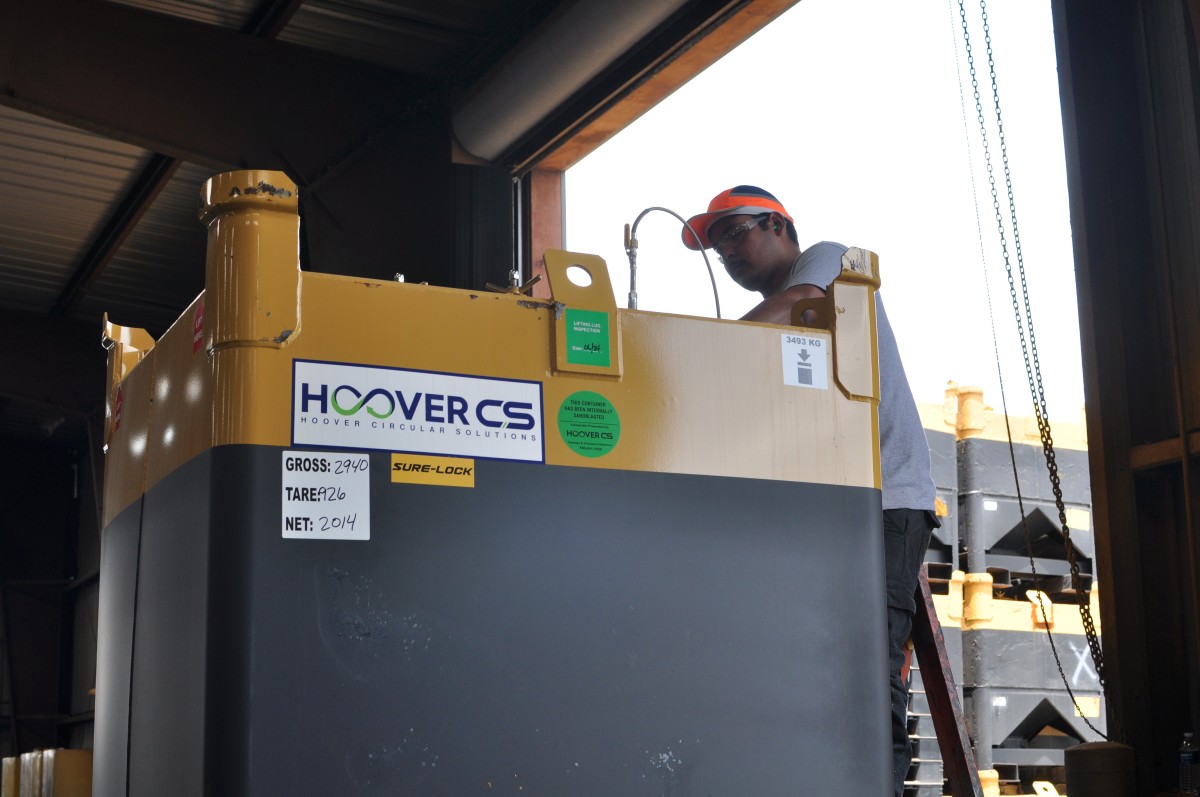
High-volume maintenance events require strong organization, site planning, and documentation discipline. Without clear bin labeling and staging procedures, confusion can cause delays resulting in operational downtime. Effective storage management typically includes:
- Clear bin identification with proper labels and markings
- Defined staging zones with color coding and segregation
- Pre- and post- inspection documentation
Best Practices for Catalyst Transportation
Transporting catalyst bins, whether by road, rail, or maritime, requires logistics expertise and special attention to product integrity, safety, and regulatory control.
Secure Loading and Regulatory Alignment
All transport modes require catalysts to be securely contained with proper classification and documentation. Improperly secured bins, overweight loads, and misplaced shipping documents lead to safety risks and fines.
Logistics coordination should comply with both transportation regulations (UN, DOT, ADR, and IMDG) and site-specific safety protocols, with clear communication established between plant personnel and support teams.
Integrating Logistics Into Turnaround Planning
Refineries that treat packaging logistics as operational infrastructure, rather than procurement line items, tend to execute smoother, shorter, and safer turnarounds. While each turnaround will have its own complexities and requirements, integrating logistics early on ensures seamless deployment of catalyst bins, equipment, on-site support, and personnel.
This early coordination of logistical needs and transport modes enables efficient and high-performing turnarounds. With more uptime, refineries benefit from increased revenue, fewer disruptions, and improved operations.
Common Mistakes to Avoid
Even well-planned turnaround and maintenance events encounter avoidable issues that impact performance.

- Poor labeling and documentation: Allowing bins to be transported without proper shipping documents leads to major compliance and safety risks.
- Reusing bins with residual heel: Leftover material can contaminate future catalyst transfers and repackaging, resulting in unplanned delays.
- Damaged or missing seals: Small leaks can lead to catalyst deactivation due to moisture. Never force closures and regularly inspect connections.
- Overfilling or improper loading: Always follow loading procedures to avoid structural integrity failures and stress.
Professional Catalyst Management and Logistics From Hoover CS
As you can see, catalyst management intensifies during turnarounds, when schedules compress, and execution margins narrow. Specialized catalyst packaging and logistics service providers, like Hoover CS, help facilities alleviate that pressure with dedicated personnel for smoother refinery operations.
Supporting refineries and petrochemical companies across North America, Europe, Asia, and the Middle East, Hoover CS manages a large rental fleet of reusable catalyst bins built with cost efficiency, safety, and sustainability in mind. Every bin is scanned into our proprietary data system, and its location is updated in real time, allowing us to proactively anticipate project needs, such as bin quantities, deliveries, and pickups. With over 30 years of industry experience, we are proud to provide packaging and logistics services that result in highly optimized turnarounds.
How To Choose the Right Catalyst Storage and Transportation Partner
Choosing a catalyst storage, management, and transportation partner requires evaluating how well a provider integrates into your operations. The right provider is not just moving bins; they are protecting valuable catalysts throughout their lifecycle, preventing safety incidents, and keeping your turnaround on schedule.
Here are five questions to consider when evaluating potential partners:
1. Do you have sufficient bin inventory and availability to meet our turnaround schedule and future project needs?
2. What is your transportation network and multi-modal capabilities?
3. How are you tracking bin movements and locations?
4. What is your waste handling capacity, and can you coordinate with regenerators and recyclers in compliance with environmental regulations?
5. What is your quality assurance checklist before a bin leaves your facility?
Catalyst logistics influences plant performance long before a unit returns to service, which is why an experienced service provider is of utmost importance. Strong containment and management practices, along with disciplined coordination, create the stability operations teams depend on during critical turnarounds and events. For organizations applying the principles and best practices outlined in this complete guide to catalyst storage and transportation, the advantage is greater uptime and fewer surprises along the way.
If your facility is evaluating its current approach to catalyst management, Hoover CS is ready to support you. Contact our team to discuss your upcoming catalyst packaging and logistics needs.