Chemical companies rely on industrial packaging to safely move raw materials, intermediates, specialty chemicals, and finished products through a complex supply chain—and those packaging decisions have a bigger impact than you might think. Container selection can influence product handling and transportation activity, while the way companies manage packaging after delivery determines whether assets return to circulation or enter the waste stream. Those connections explain why sustainable packaging matters in the chemicals industry as companies look for practical ways to reduce environmental impact without compromising operational performance.
A meaningful packaging strategy should consider the total lifecycle, beginning with container selection and continuing through use, recovery, and eventual end-of-life management. For chemical manufacturers and distributors, the objective is not simply to improve sustainability efforts. The greater opportunity lies in creating a circular packaging model where one-way containers are replaced with reusable assets for significant financial and operational improvements.
Chemical Packaging Creates Impacts Beyond the Container
Chemical packaging plays an important role in nearly every stage of the supply chain, influencing much more than how products are stored and transported. These decisions can affect transportation efficiency, warehouse space, handling, procurement costs, and waste management.
For chemical companies relying on single-use containers, the need to continuously purchase, transport, and manage replacements can create additional operational demands. Empty containers also require appropriate handling, storage, and disposal or recycling, adding another layer of complexity to supply chain operations.
These considerations make packaging an important part of a company’s broader sustainability strategy. By evaluating how containers move throughout the supply chain and identifying opportunities for reuse, businesses can work toward reducing unnecessary resource consumption while improving operational efficiency.
Reuse Reduces Demand for New Packaging
Traditional single-use packaging such as drums, plastic-cage totes and other one-ways require a continuous supply of new containers, creating ongoing demand for raw materials and energy consumption while generating waste after each shipment. When this purchase and disposal cycle repeats across hundreds or thousands of shipments, the financial impact can be substantial.
Reusable packaging like stainless-steel intermediate bulk containers (IBCs), offers an alternative by allowing companies to keep durable assets in circulation through multiple shipping cycles. Instead of disposing of packaging after a single use, companies can return containers for cleaning, inspection, and reconditioning as needed before placing them back into service.
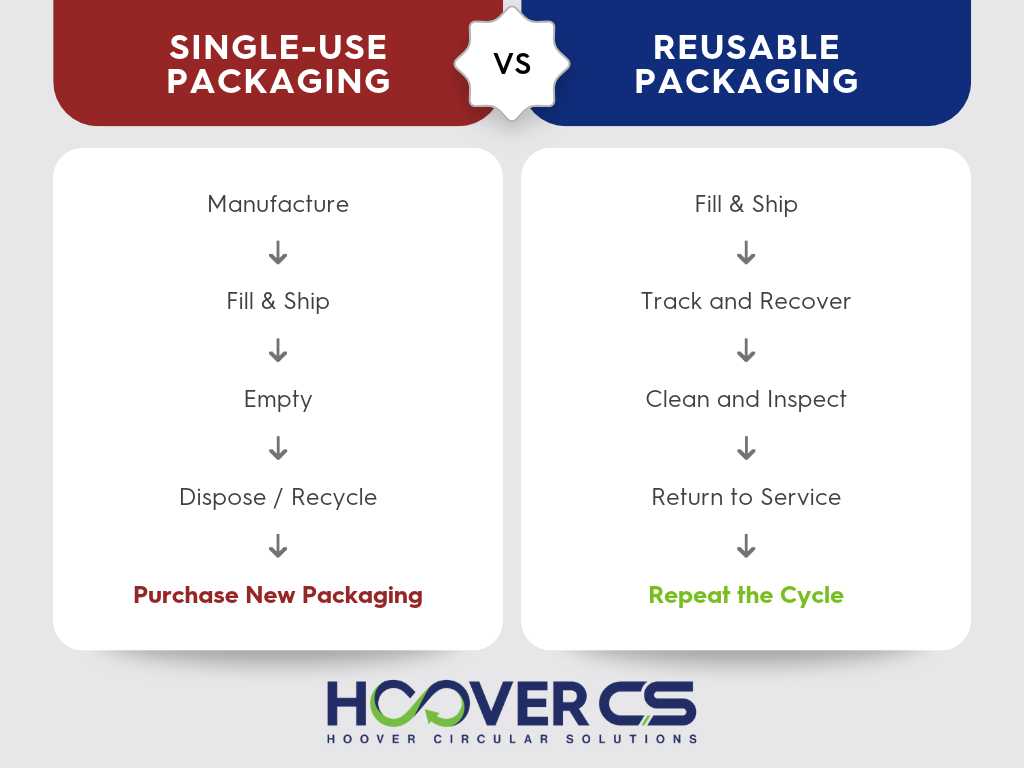
A sustainable chemical packaging strategy focuses on extending the productive value of existing containers, minimizing the need for continually manufactured replacements.
Transportation Activity Can Affect Packaging Sustainability
Chemical containers affect transportation and logistics efficiency long after a company makes the initial packaging decision. Capacity, weight, and stackability can influence shipping configurations and how companies plan loads, while unnecessary transportation activity and end-of-life management can contribute to a company’s indirect Scope 3 emissions.
Companies should therefore account for how their selection fits within the broader logistics network. Packaging teams can examine whether their container strategy supports efficient movement and whether assets have a practical path back into circulation after unloading. Optimizing container returns and collections becomes increasingly relevant with reusable IBCs, as reverse logistics play a key role in circular packaging performance.
Viewing packaging and transportation together gives chemical companies a clearer picture of lifecycle performance, offering an opportunity to reduce associated emissions and strengthen ESG strategies.
Cleaning and Maintenance Extend the Packaging Lifecycle
Reusable industrial packaging depends on a service infrastructure that keeps containers in circulation through multiple uses. Professional cleaning and routine maintenance are essential to extend the service life of these assets, helping maintain their safety, quality, and UN/DOT compliance.
Through specialized cleaning processes, residual chemicals and contaminants can be removed to prepare containers for their next application. Routine inspections help identify signs of wear, damage, or deterioration, while reconditioning allows certain components to be repaired or replaced rather than disposing of the entire container. Each container must also be evaluated to ensure it remains suitable for its intended use and meets applicable safety and regulatory requirements.
A structured servicing program allows organizations to manage containers as long-term, reusable assets rather than a single-use expense. By extending the useful life of packaging, companies can minimize waste and eliminate their reliance on a continuous cycle of purchasing and disposing of single-use alternatives.
Improved Safety and Operational Efficiency with Reuse
In the chemicals industry, packaging must do more than solely contain a product. Selecting compatible containers can also support safer handling and efficient transportation throughout the supply chain.
Reusable solutions like metal IBCs provide distinct advantages over single-use containers, including the ability to consolidate the volume of multiple smaller drums. Their durable construction, large capacities, and stackable configurations optimize transportation routes and shipment frequency to reduce trucking costs.
High-quality closures, pressure valves, and seals also help maintain product integrity during transport and reduce the likelihood of product loss, accidental spills or environmental releases. Improvements in warehouse handling and streamlined logistics results in safer, more efficient chemical operations.

Asset Visibility Supports Effective Container Recovery
Reusable packaging plays an important role in creating a circular chemical supply chain, but its effectiveness depends on more than the containers themselves. To maximize the benefits of reuse, companies need visibility into where their assets are located, how they’re being used, and when they’re ready to be returned.
Tank fleet management technology helps track reusable assets throughout their lifecycle, providing greater insight into container movements, availability, and utilization. With improved visibility, teams can more effectively coordinate collection and return logistics, reduce the risk of lost or idle equipment, and keep valuable packaging in circulation.
By combining reusable containers with effective fleet management solutions, chemical manufacturers and distributors can increase turns, improve recovery rates, reduce unnecessary replacement purchases, and maximize the useful life of their packaging. This approach helps close the loop on industrial packaging while supporting greater supply chain efficiency and long-term sustainability goals.
Measuring Sustainability in Chemical Operations
As chemical companies look for ways to demonstrate environmental progress, reusable packaging offers an opportunity that single-use containers cannot—the ability to track meaningful improvements in resource efficiency, waste reduction, and related emissions.
Monitoring factors such as container reuse, packaging waste avoided, and lifecycle impact give businesses greater visibility into the sustainability of their packaging operations. These insights can also support ESG reporting and help leaders communicate their progress to customers and stakeholders.
By evaluating packaging performance and communicating measurable results, companies can demonstrate their commitment to more resource-efficient operations and continuously identify opportunities for improvement.
Building a More Sustainable Chemical Packaging Strategy
The reasons sustainable packaging matters in the chemicals industry become clearer when companies evaluate the entire lifecycle of their packaging—not just at the point of use. From the raw materials and energy consumption for manufacturing to the transportation, storage, servicing, and eventual end-of-life management, every stage of the packaging lifecycle contributes to a company’s overall environmental footprint. A sustainable strategy connects those stages to identify opportunities to conserve resources, reduce waste, and improve supply chain efficiency.
Hoover Circular Solutions supports chemical companies pursuing circular initiatives by offering reusable industrial packaging solutions with integrated cleaning, maintenance, and fleet management services. Organizations that are interested in transitioning from disposable, single-use containers to reusable IBCs can contact Hoover CS to discuss solutions that align operational requirements and sustainability goals.